5 Ways To Teach Newton's First Law In Your Homeschool
Teaching feels intimidating for a lot of parents.
And I understand why!
My memories of learning physics in high school was a dry textbook, lots of formulas on the board, and a lot of homework I didn't know how to do.
But what if it didn't have to be that way?
What if we could plant the seeds now to prepare our students for more difficult sciences in high school?
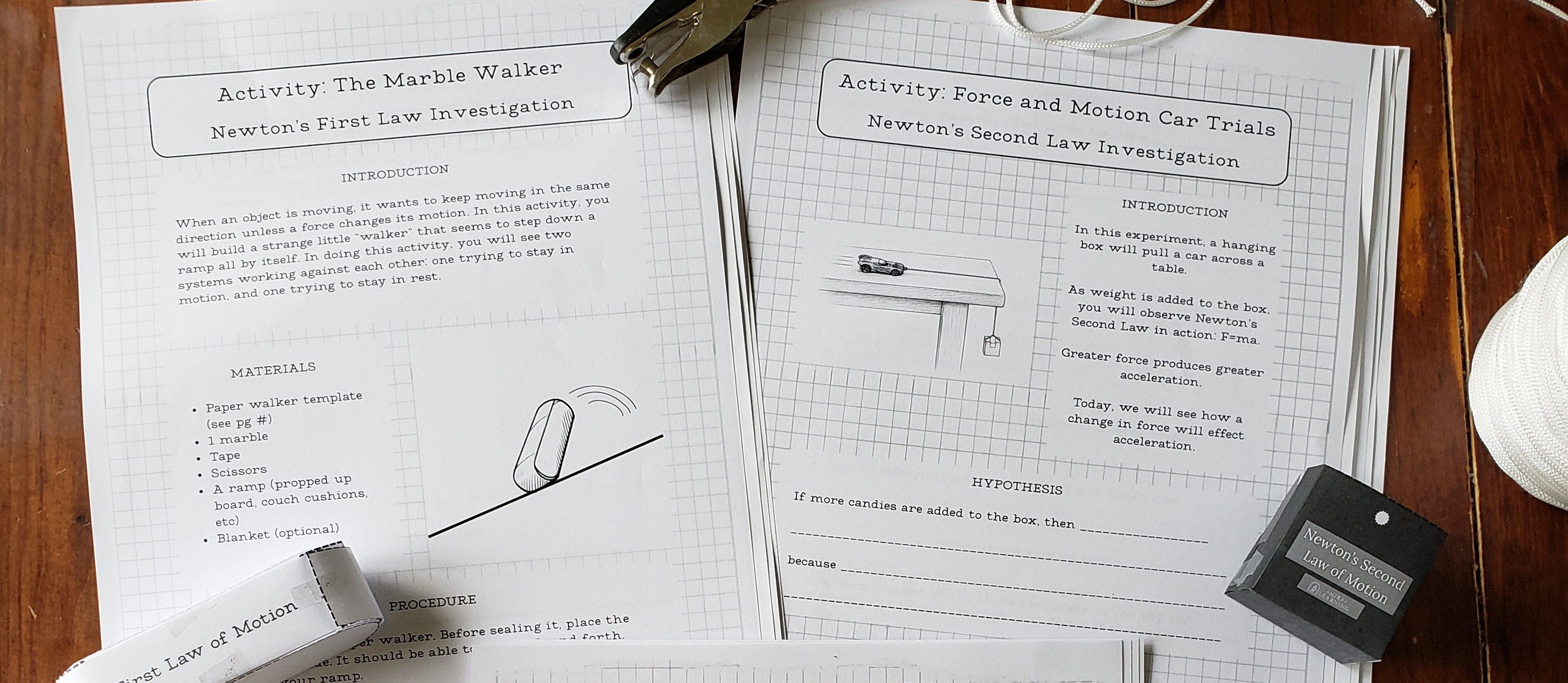
Below, I've outlined 5 things you can do to teach your child the First Law at home.

Image source: NASA
1. Use A Living Story
One of my favourite ways to introduce Newton's First Law of Motion is through the story of astronaut Edward White.
The Story of Edward White
In 1965, Edward White became the first American astronaut to perform a spacewalk. During his spacewalk, one of his extra gloves came loose and floated away.
This glove floated.
And floated.
And floated.
It is said his glove orbited the Earth once every 90 minutes, month after month, until the glove finally burned up in the atmosphere.
On Earth, we're used to objects stopping because of other external forces, such as gravity or friction. In space, because those forces don't exist the same way, objects continue to stay in motion.
After hearing this students, you can ask some questions:
- Why didn't the glove slow down?
- What forces usually slow objects down on Earth?
- Would a rolling ball roll forever if there was no friction?
2. Memorize Or Dictate The Definition
I do believe students should become familiar with the definition If you don't want go the memory route, at least dictate the definition and have your child write it down:
"Objects in motion stay in motion unless an external force acts upon it.
Objects at rest stay at rest unless an external force acts upon it.”
If you want fun science themed copywork or dictation pages, you can download some here for free.
3. Use Real Life Examples
Newton's First Law is felt every day! Use these two examples to help show your student what the first law feels like:
A. The bicycle
What would happen if you were riding a bike, and you ran into a big rock? Your bike would come to a stop all of a sudden, but what would happen to your body? Why does that happen?
B. Digging sand
When you're digging sand at a beach, what motion do you do with your shovel to throw the sand in front of you? Why does that work? How does that show Newton's First Law?
4. Coin and Card Experiment
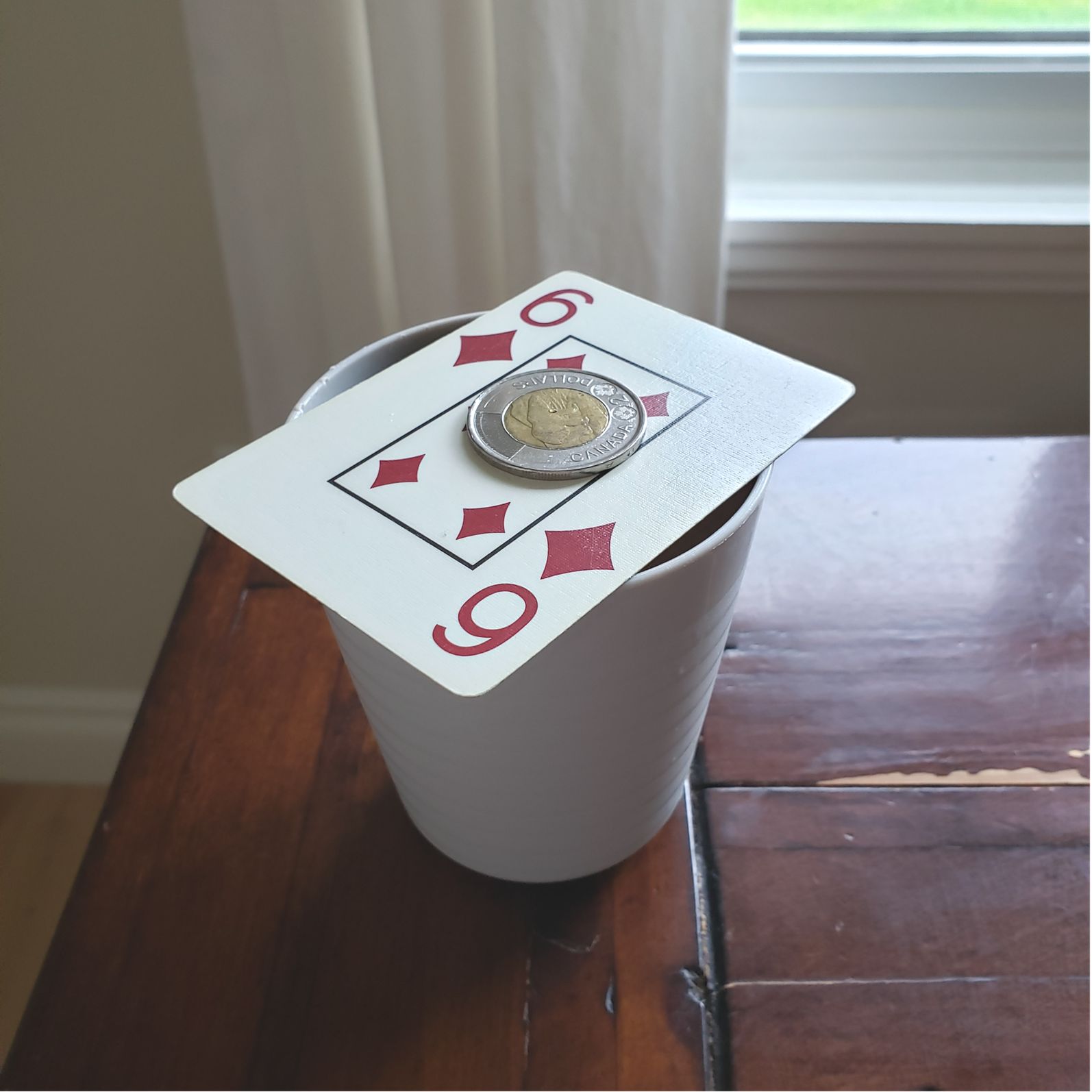
Place a card on top of a cup, then place a coin on top of that card. Flick the card away. Because the coin has inertial and tends to stay at rest, the card will be flicked away while the coin drops into the cup.
5. Newton's Walker
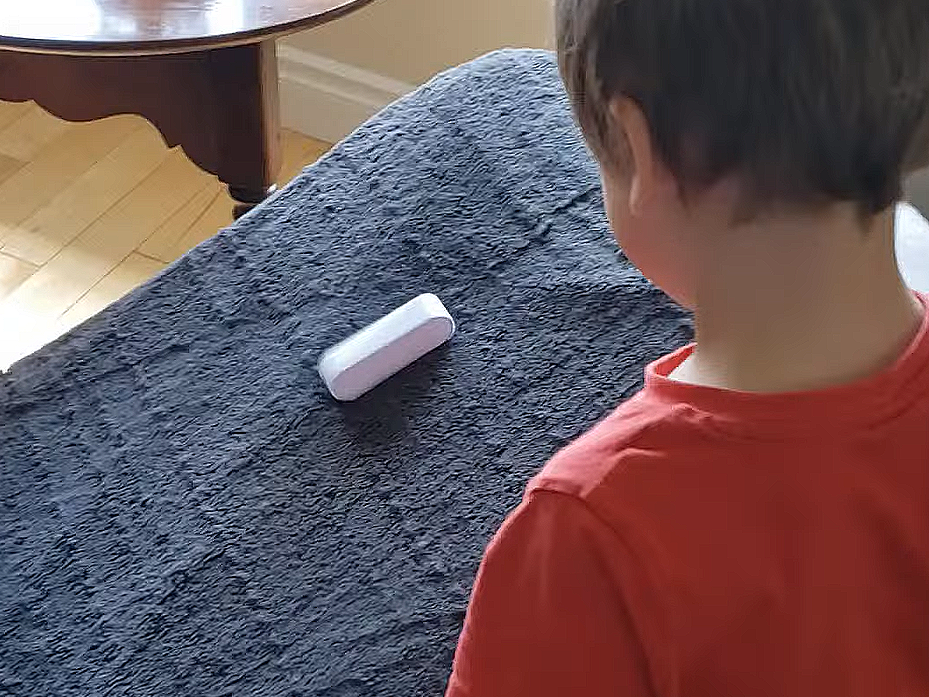
This is a great activity that showcases both an object staying in motion, as well as an object that stays at rest until a force acts upon it. See here if you want to see a video of how it works!
If you want everything laid out without having to do any prep work, I have a unit study for you!
Newton's Laws of Motion Unit Study
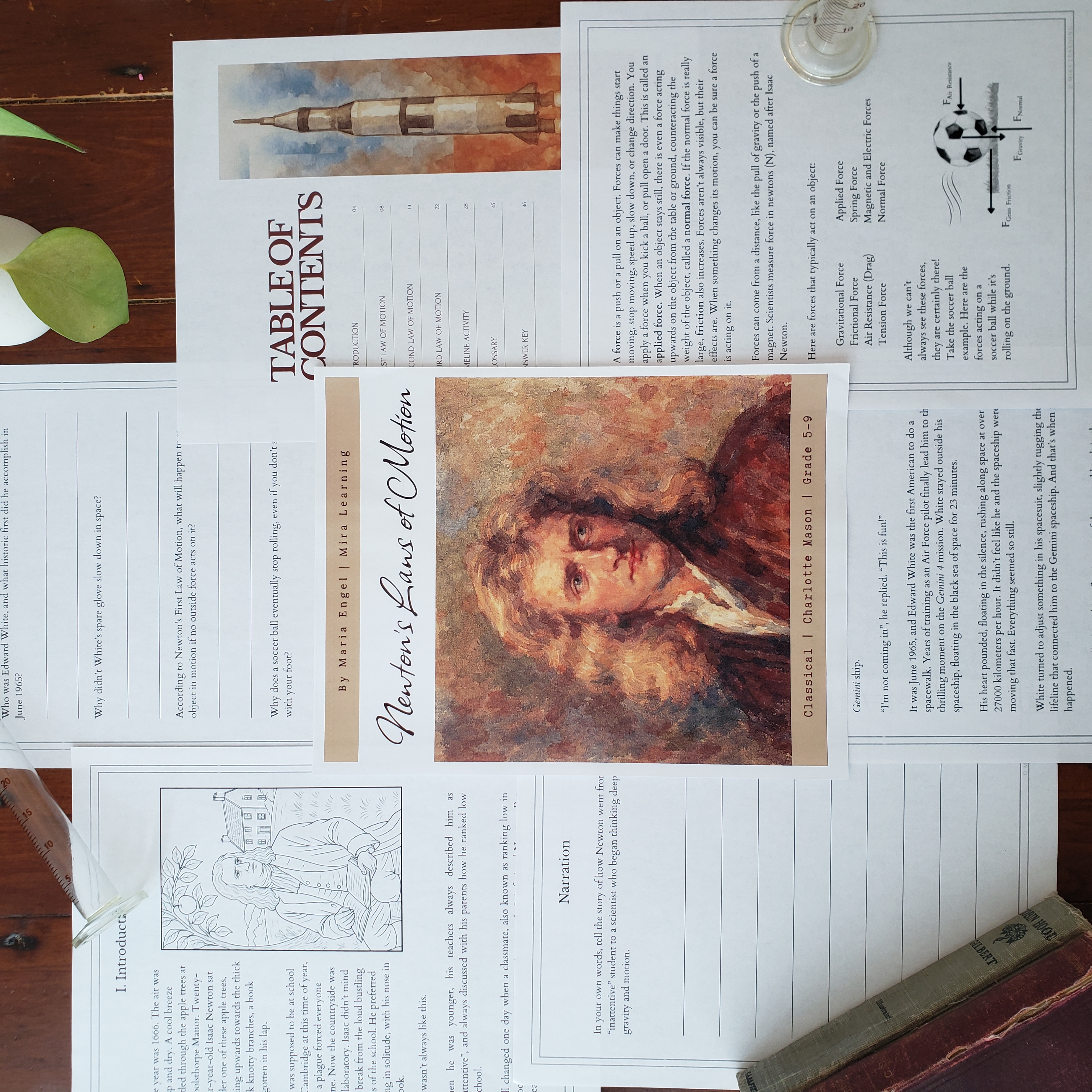
In this unit study for grades 5-9, students cover each law with a living story, narration prompts, and a hands-on activity. The study includes:
- Newton's biography
- Three laws of motion described through living narratives
- Three hands-on activities and experiments (including the Newton's Walker above!)
Already doing a lab activity in coop? You can buy the workbook by itself to support learning at home.
Need just the lab activities? The activity pack can also be purchased separately without the workbook!
I hope these ideas bless your homeschool!
